
Alan Parsons: the man behind the glass
15 songs · 5 narrations · 79 min
Alan Parsons (born 1948, London) is one of the few people in music who became famous twice. First as the engineer behind some of the best-sounding records ever made: tape operator on the Beatles' Let It Be sessions and Abbey Road, engineer on Pink Floyd's The Dark Side of the Moon. Then as the name on the cover of The Alan Parsons Project, the studio-only concept act he built with songwriter Eric Woolfson from 1975 to 1990. Its albums were about Edgar Allan Poe, robots, pyramids, gambling and surveillance, and together they sold millions of copies. In between he produced hits for Pilot, Cockney Rebel, Al Stewart and Ambrosia, and he turned down Wish You Were Here to start his own thing. He didn't go on stage until the 1990s. Today he tours as the Alan Parsons Live Project, records at his ParSonics studio in Santa Barbara, has 13 Grammy nominations and one win, and is an OBE. These fifteen songs trace that path from behind the console to the front of the stage.
“I heard Sgt. Pepper in '67, and I just said, "I want to find out how The Beatles do this stuff."”
“I tried to not be a dictator, not be a guy screaming and shouting that it wasn't right or the part was wrong, whatever. I was always receptive to incoming ideas.”
The iconic song

This is the Project's biggest hit: #3 in the US and #1 in Canada. The lyric is about security cameras and the feeling of always being watched. It is the most complete picture of the Parsons–Woolfson partnership: Eric Woolfson's song and voice with Parsons' spacious, precise production. Thirty-five years later, the immersive remix of the album won Parsons his first Grammy. On the album it follows the instrumental "Sirius", which the Chicago Bulls made famous as Michael Jordan's walk-on music, so play the two together.
“I think the lyric of "Eye In The Sky" covers the sort of the security camera, the hidden camera, the notion that we're not alone. Every move we make is chronicled somehow.”
“But that tune has arguably become our most famous piece, ever, because of the Chicago Bulls using it, and other sports teams.”
Alan Parsons on stage with an acoustic guitar, 2017. Photo: Stefan Brending (2eight) · CC BY-SA 3.0 de, via Wikimedia Commons

The Abbey Road years (1969–1973)
Behind the Glass
Before anyone knew his name, Parsons was the kid on the tape machine at Abbey Road. He joined at 18, was a tape operator for the Beatles within months, and four years later engineered the record that defined studio sound. These songs aren't his compositions, but you can hear his ears in them. This is where he learned that the studio itself could be an instrument.
“The only similarity is that they both liked to use the studio to its fullest, and they were always looking for new effects and new sounds.”
Alan Parsons in a recording studio control room at Tecnológico de Monterrey. Photo: Natalia0893 · CC BY-SA 4.0, via Wikimedia Commons

By the time of Abbey Road the Beatles were recording one at a time. Parsons watched Paul McCartney come back day after day to chase the perfect vocal, an early lesson in how much patience a great take can need.
“He would come in every day at 2 p.m. and sing "Oh! Darling" a couple of times, and say, "No, that's not it," and then come in the next day and do it again.”
— Alan Parsons · Songfacts, 2019 
The alarm-clock intro is Parsons' handiwork. He recorded every clock in an antique shop separately, then lined them all up on the multitrack to strike at once. The record earned him his first Grammy nomination.
“I recorded those clocks in a local shop quite close to Abbey Road, an antique shop. It had a really good selection and I just got the boss of the shop to stop all the clocks. Then I recorded each one of them separately, both ticking and chiming.”
— Alan Parsons · The Strange Brew, 2024 The cash-register intro is a loop of seven sounds: coins, a bag of money, tearing paper and even a telephone exchange. Parsons spliced it together on tape. The loop runs in 7/4 and was the only click track the band played to, which makes it an early form of sampling.
“Anyway, those seven samples we had to make into a continuous loop. Much of the song is in a time signature of seven beats in a bar, 7/4 time, which is very unusual.”
— Alan Parsons · The Strange Brew, 2024 “It was effectively the click track that they actually played the song to. There wasn't a separate metronome or click track of any sort. They just played to that loop.”
— Alan Parsons · The Strange Brew, 2024

Producer for hire (1975–1976)
The Hitmaker
After Dark Side, the phone started ringing. Parsons became a producer and quickly scored back-to-back UK number ones. He also turned a folk singer's ballad into a jazzy radio classic. This is Parsons as the person shaping someone else's song. The band he produced in this period, Pilot, became the backbone of the Alan Parsons Project.
“I would suggest double tracking stuff, going for a bigger sound. Orchestration, it was a big thing that he hadn't really done before.”
Alan Parsons playing guitar under stage light beams, 2017. Photo: Andemaya · CC BY-SA 4.0, via Wikimedia Commons

This was his first number one as a producer. It was knocked off the top by another Parsons production, Cockney Rebel's "Make Me Smile (Come Up and See Me)". Pilot's guitarist Ian Bairnson and bassist David Paton went on to play on the Project albums.
“The Cockney Rebel single "Come Up And See Me" took over from "January" as a number one so I was definitely drinking champagne that night when I found out that I'd had two consecutive number one hits.”
— Alan Parsons · The Strange Brew, 2020 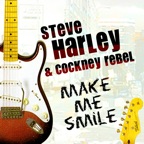
06Make Me Smile (Come Up and See Me)
Steve Harley & Cockney Rebel · The Best Years of Our Lives · 1975
Producer
This is the second half of his double. It replaced his own production of "January" at #1 in the UK. Cockney Rebel also gave the Project its long-time drummer, Stuart Elliott.
“Yes. And the interesting thing, or the amazing thing, was that they were consecutive.”
— Alan Parsons · The Strange Brew, 2020 
Parsons pushed Al Stewart toward a bigger, orchestrated sound and added the famous saxophone solo, which Stewart resisted at first. It became Stewart's biggest hit.
“The famous sax solo on 'Year of the Cat', that completely flummoxed him. He didn't know what to expect with a saxophone solo. He said, "Saxophone, that's a jazz instrument. I'm a folk rock artist." But in the end, he loved it.”
— Alan Parsons · The Strange Brew, 2024

Concept albums with Eric Woolfson (1976–1980)
The Project
The Alan Parsons Project was a two-man studio act. Eric Woolfson wrote the songs and lyrics and came up with the concepts. Parsons shaped the sound, the arrangements and the instrumentals, and a rotating cast of singers and session players performed them. Every album had a theme, from Edgar Allan Poe to pyramids to the casinos of Monte Carlo. These four songs show that the Project could experiment, make instrumental music and write pop hits.
“Well, Eric Woolfson of course was my principal collaborator with the Alan Parsons Project. We were a two-man team. Eric was the principal songwriter and lyric writer, and I would occasionally pop in with a line or two.”
The Alan Parsons Live Project band on stage under colored light beams, 2017. Photo: Andemaya · CC BY-SA 4.0, via Wikimedia Commons

08The Raven
The Alan Parsons Project · Tales of Mystery and Imagination · 1976
Co-writer, producer, engineer
This comes from the first Project album, based on Edgar Allan Poe. Parsons ran the vocals through a primitive vocoder built by EMI's research department, which he believes was the first real use of one on a rock album.
“It was incredibly fussy on what levels and what sounds that you could produce with it, but it was a vocoder and it was, as far as I know, the first real use of vocoder on a rock album. So, yeah, it was a proud moment.”
— Alan Parsons · The Strange Brew, 2020 
This cinematic instrumental is the purest sound of Parsons' own musical voice, with choir, orchestra and band. Pyramid began as an album about witchcraft before it turned into one about pyramid power.
“I liked 'In the Lap of the Gods', because I made a valid contribution to that, it was instrumental.”
— Alan Parsons · The Strange Brew, 2024 “But 'In the Lap of the Gods', I feel I was much more responsible for that than some of the other tracks on the album.”
— Alan Parsons · The Strange Brew, 2024 
This is the opening instrumental of Eve, which was recorded in a studio in the hills above Nice. It was a #1 hit in Germany, one of the countries where the Project was bigger than at home.
“But Eve probably did better business than Pyramid did when 'Lucifer', the opening track, was a number one in Germany. And the album also hit number one in Germany.”
— Alan Parsons · The Strange Brew, 2024 
This album is where the hit singles really started. It reached #16 in the US and #9 in Canada. Parsons and Woolfson had moved their families to Monte Carlo and made an album about gambling while living next to the casino.
“It's just a gambling theme. We literally lived 10 paces from the Monte Carlo Casino - we were right there.”
— Alan Parsons · Songfacts, 2019

Songs that outlived the albums (1981–2019)
Stepping Into the Light
These are the songs people kept. They get played at funerals, on MTV and every night on tour. Parsons didn't perform live until the 1990s. When he finally did, he took over the songs Eric Woolfson had sung and eventually sang his own. The block ends with the engineer at the front of the stage.
“I tend to sing the songs that Eric sang on the records ever since I've been playing live since '95.”
The Alan Parsons Live Project taking a bow in front of the audience, 2017. Photo: Andemaya · CC BY-SA 4.0, via Wikimedia Commons
Twelve years after he recorded the clocks for Pink Floyd's "Time", this is a very different song with the same name: a slow, orchestral ballad sung by Eric Woolfson. It reached #15 in the US and is still a favourite at concerts.
“Well "Time" did incredibly well for us. It's a firm favourite live as well.”
— Alan Parsons · The Strange Brew, 2020 
The closing ballad of Eye in the Sky, sung by Colin Blunstone. Parsons says it was the Project's biggest UK hit, even though it only peaked at around #27. Like "Time", it has become a song people choose for funerals.
“The biggest hit we ever had in the UK was 'Old and Wise'. I think it got to number 27 for two weeks or something, then got forgotten.”
— Alan Parsons · The Strange Brew, 2024 “There are two songs that people favour for funerals – doomy gloomy – but "Old and Wise" is another song.”
— Alan Parsons · The Strange Brew, 2020 
This is a deliberate homage to Phil Spector's wall of sound, and it reached #15 in the US. Its Dick Tracy-style animated video was an MTV staple. Woolfson sang it on the record, and Parsons now sings it every night on tour.
“It was a deliberate attempt to emulate the Phil Spector sound and that's when we decided to give it that Spector treatment and that's when it came together and we got excited about it.”
— Alan Parsons · The Strange Brew, 2020 “It's one of our strongest hits - we always play it in the show, and I always sing it.”
— Alan Parsons · Songfacts, 2019 
This comes from his magic-themed comeback album, recorded at his own ParSonics studio in Santa Barbara. After fifty years spent mostly behind the console, it's the first album track he sings lead on.
“It's the first album track that I've sung lead. Yes. I've done a couple of singles where I did a vocal but, yeah, it's the first song that I've done a full-blown live vocal on and it's good and it's been fun to play it live as well.”
— Alan Parsons · The Strange Brew, 2020
Sources
This story was researched from these interviews, videos and references. Every quote is Alan Parsons's own words, taken verbatim from the source marked “Quoted”.
Narration is an AI-generated voice (ElevenLabs), reading the text on this page.
Interviews
- Alan Parsons: Songwriter Interviews
Songfacts, 2019Quoted
- Alan Parsons: Ammonia Avenue
The Strange Brew, 2020Quoted
- Alan Parsons: Pyramid and Beyond
The Strange Brew, 2024Quoted
- Alan Parsons: Engineering Pink Floyd & Studio Mastery
Tape Op #42, 2004
- Alan Parsons: Engineering Pink Floyd & Studio Innovation
Tape Op #164, 2024
- Why Alan Parsons Might Return to Pink Floyd's Weirdest Album Idea
Ultimate Classic Rock, 2019
Videos
- Sweetwater Minute – Vol. 99, Alan Parsons Interview
Sweetwater (YouTube), 2011
- Alan Parsons Interview with The Backbeat Experience
The Backbeat Experience (YouTube), 2010
- Alan Parsons Q&A, Part 1 of 3 – On the Blue Cruise
On the Blue Cruise (YouTube), 2024
Reference
- Alan Parsons
Wikipedia
Photos
- Alan Parsons on stage with an acoustic guitar, 2017
Stefan Brending (2eight) · CC BY-SA 3.0 de, via Wikimedia Commons
- Alan Parsons in a recording studio control room at Tecnológico de Monterrey
Natalia0893 · CC BY-SA 4.0, via Wikimedia Commons
- Alan Parsons playing guitar under stage light beams, 2017
Andemaya · CC BY-SA 4.0, via Wikimedia Commons
- The Alan Parsons Live Project band on stage under colored light beams, 2017
Andemaya · CC BY-SA 4.0, via Wikimedia Commons
- The Alan Parsons Live Project taking a bow in front of the audience, 2017
Andemaya · CC BY-SA 4.0, via Wikimedia Commons